From the blog
Puma Training Shoes for Gym: What to Check
Determining whether a Puma shoe is suitable for everyday gym use isn't just about the brand, colorway, or product name. A more reliable approach is to first che...
Determining whether a Puma shoe is suitable for everyday gym use isn't just about the brand, colorway, or product name. A more reliable approach is to first check what structural information is shown on the product page, then verify against the demands of your training movements for stability, lockdown, and room to move.
Defining the Evaluation Scope for Everyday Gym Use
"Suitable for gym" is not a one-size-fits-all conclusion. Strength training, machine training, and short warm-ups have different shoe requirements: strength training prioritizes standing stability and heel lockdown, machine work generally requires foot comfort, and warm-ups focus more on mobility and overall feel.
Therefore, the evaluation should focus on whether the outsole provides stable support, whether the upper reduces foot slippage inside the shoe, whether the heel is adequately secured, and whether the shoe's structure matches your training movements. If the product page does not clearly show this information, you cannot conclude that a Puma shoe is a proper training shoe based solely on the brand or appearance.
Checking Outsole Structure, Upper Material, Heel Lockdown, and Sizing Info from the Product Page
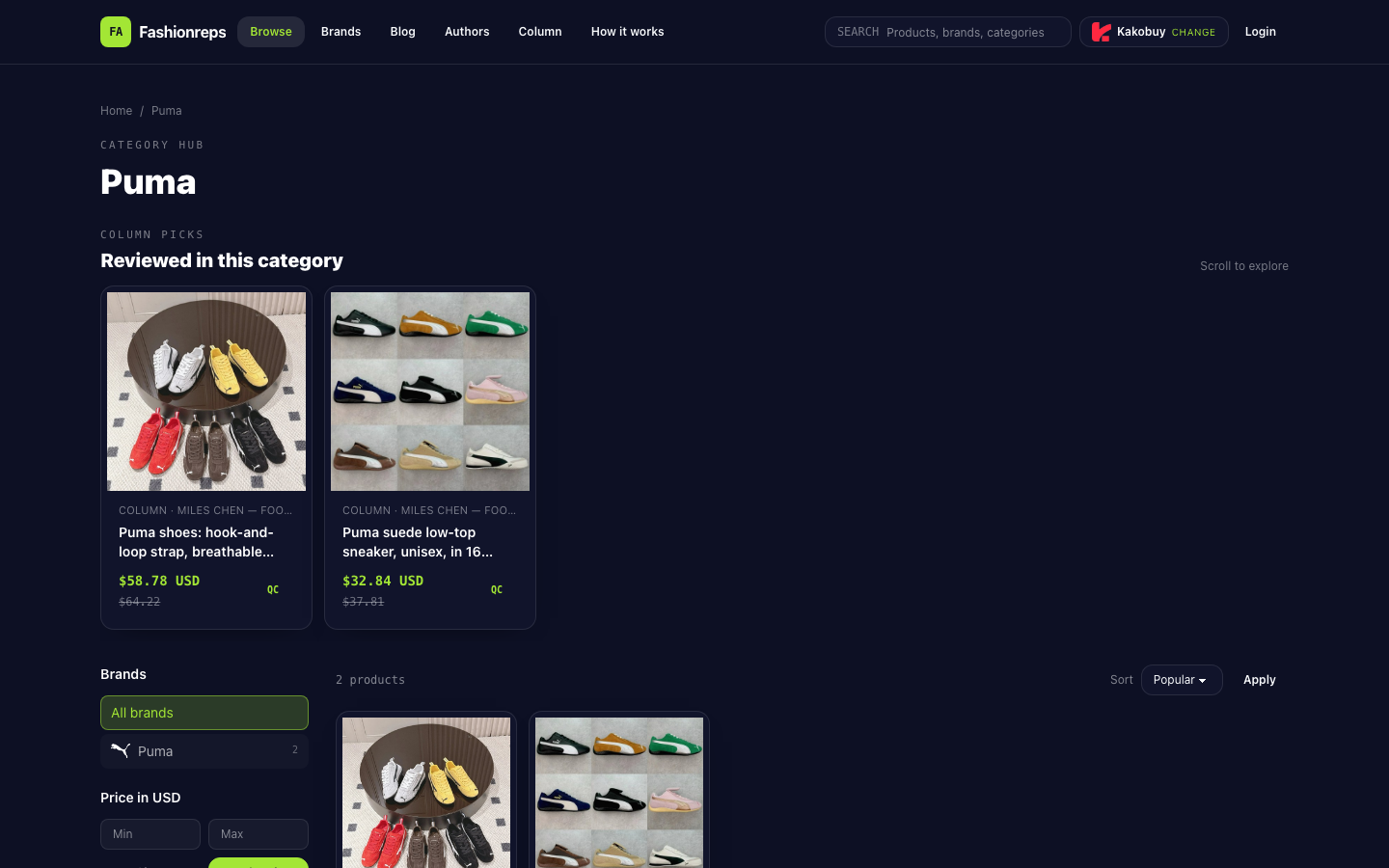
The currently verifiable Puma category page shows two products, but the publicly available information mainly covers upper style, material, color, and size range. It does not fully detail outsole hardness, tread pattern, heel support, or training suitability.
| Visible Product Page Info | Supports This Judgment | Does Not Directly Support This Judgment |
|---|---|---|
| One shoe is labeled as Velcro closure, breathable construction | Can confirm the page emphasizes closure and breathability | Cannot confirm suitability for squats, deadlifts, or high-intensity training |
| One is a suede low-top casual shoe, labeled unisex, 16 colorways, sizes 35–45 | Can confirm clear style options and size range | Cannot confirm outsole stability, durability, or suitability for gym floors |
| Page shows a QC photo link | Can use QC photos as a lead to further verify product details | Cannot treat category page link as evidence of actual wear or training testing |
The product page lists reference prices of $58.78 and $32.84, along with previous reference prices. Prices are only reference information at the time the page was viewed and cannot be used to infer current stock, shipping, final payment, or after-sales conditions.
When checking the outsole, look at whether the outsole is flat, whether the contact area is sufficient, and whether the forefoot flex matches your training movements. If the page lacks clear outsole photos or structural descriptions, mark these items as "to be verified" rather than filling in conclusions yourself.
When checking the upper, Velcro, laces, or other closure methods only tell you how the shoe closes. Whether the lockdown is reliable also depends on the coverage of the strap, the collar wrap, and whether the heel lifts easily. A breathable construction helps indicate the page emphasizes ventilation design, but it does not guarantee comfort during extended training.
Breaking Down Needs by Strength Training, Machine Training, and Short Warm-Up
Strength Training
If you primarily do squats, deadlifts, leg presses, or other movements requiring a stable stance, prioritize checking outsole flatness, heel lockdown, and lateral support. The current category page does not provide enough evidence on outsole and heel structure, so you cannot directly consider either shoe a strength training shoe.
Especially the suede low-top: the page information is closer to an appearance and basic size introduction. Suede material itself does not prove outsole stability, nor does it prove the upper can withstand friction from repeated training. Without clear QC photos or a more detailed product page, the conclusion that it suits strength training should be deferred.
Machine Training
For fixed machines, light training, or seated gym scenarios, outsole stability requirements may be lower than for heavy free weights, but the shoe should still fit well, the heel should not slip constantly, and the upper should not cause noticeable pressure on the toes.
The model labeled as breathable can be an object for further verification for those concerned about stuffiness; however, the page does not provide data on wear duration, foot shape compatibility, or user feedback, so we can only say it has the breathable design shown on the page, not promise actual wearing results.
Short Warm-Up
If the main use is short walking, stretching, or low-intensity warm-up, flexibility and comfort may be more important than stability under heavy loads. However, the category page does not give complete parameters such as arch support, cushioning, or outsole flexibility, so you should still confirm through product details and QC photos.
Separating Visible Specs, User Feedback Leads, and Editorial Inferences
Visible specs are information directly stated on the page, such as Velcro closure, breathable construction, suede low-top, 16 colorways, and sizes 35–45. They can help narrow down options but cannot replace professional testing.
User feedback leads should come from actual reviews on specific product pages, QC photos, or other verifiable records. The currently provided category page information does not show enough user testing content, so you cannot write "looks suitable" as "stable when worn" or "comfortable for training."
Editorial inferences must be based on clear evidence. For example, a Velcro closure means you should focus on checking strap coverage and heel fit before buying; a suede low-top design means you should further confirm outsole and upper structure. These are verification directions, not guarantees of actual performance.
Conclusions That Cannot Be Drawn Without Real Testing
Current evidence is insufficient to confirm these Puma models' grip, durability, cushioning, arch support, long-term training comfort, or suitability for heavy squats, deadlifts, etc. The QC link on the category page cannot replace real wear testing.
Also, you cannot judge value solely from the reference price. Final choice is also influenced by size fit, foot shape, training surface, movement type, and current product status. If a product has been removed, sold out, or has a broken link, it should not be recommended as purchasable.
Using a Pre-Purchase Checklist to Decide Whether to Continue Verifying
Before buying, you can check in the following order:
- First confirm that the product page is still valid, and check current stock, sizes, and actual price.
- Look at photos of the outsole from top, side, and heel to see if contact area, tread, and structure are visible.
- Check details of the heel and collar to determine if the lockdown suits your training movements.
- Compare against your main scenario: free weights, machine training, or short warm-up.
- Check QC photos for obvious glue separation, outsole deformation, left-right asymmetry, or defects in closure parts.
- Remain skeptical about grip, durability, and comfort not explained on the page; do not substitute brand impressions for evidence.
If the page only confirms appearance, material, or closure but cannot confirm outsole stability and heel lockdown, then at most it is worth further verification, not yet a clear recommendation for everyday gym use. For those focused on strength training, prioritize shoes with more complete structural information, clearer training purpose, and corresponding physical detail evidence.
Continue reading