From the blog
Nike Black Shorts Sizing: Chart vs. Runs Small Feedback
When figuring out the size for these black athletic shorts, you can't just look at the S–2XL weight ranges on the page, nor can you directly treat the buyer fee...
When figuring out the size for these black athletic shorts, you can't just look at the S–2XL weight ranges on the page, nor can you directly treat the buyer feedback from the CU4946 reference line as actual measurements for the current product. A safer order is: first measure a pair of shorts that fits you well, then cross-check with the seller's data, and finally confirm the fabric and size details of the current variant; if key data still conflicts, hold off on ordering.
First Distinguish Current Product Info from Reference Style Feedback
The product page describes these shorts as men's mid-length, mid-rise, loose straight-leg athletic shorts, suitable for running and basketball, and lists five colors or style codes including black and gray. The page provides weight-based size ranges from S to 2XL, and notes that dimensions may have an error of about 1–2 cm.
The page also mentions bamboo fiber and spandex, but the reference style CU4946 is recorded as 100% polyester. This isn't a minor difference: different fabric composition can affect stretch, drape, breathability, and fit tightness. Therefore, CU4946's sizing and durability feedback can only serve as a reference and cannot prove that the current page's corresponding variant uses the same fabric or has the same cut.
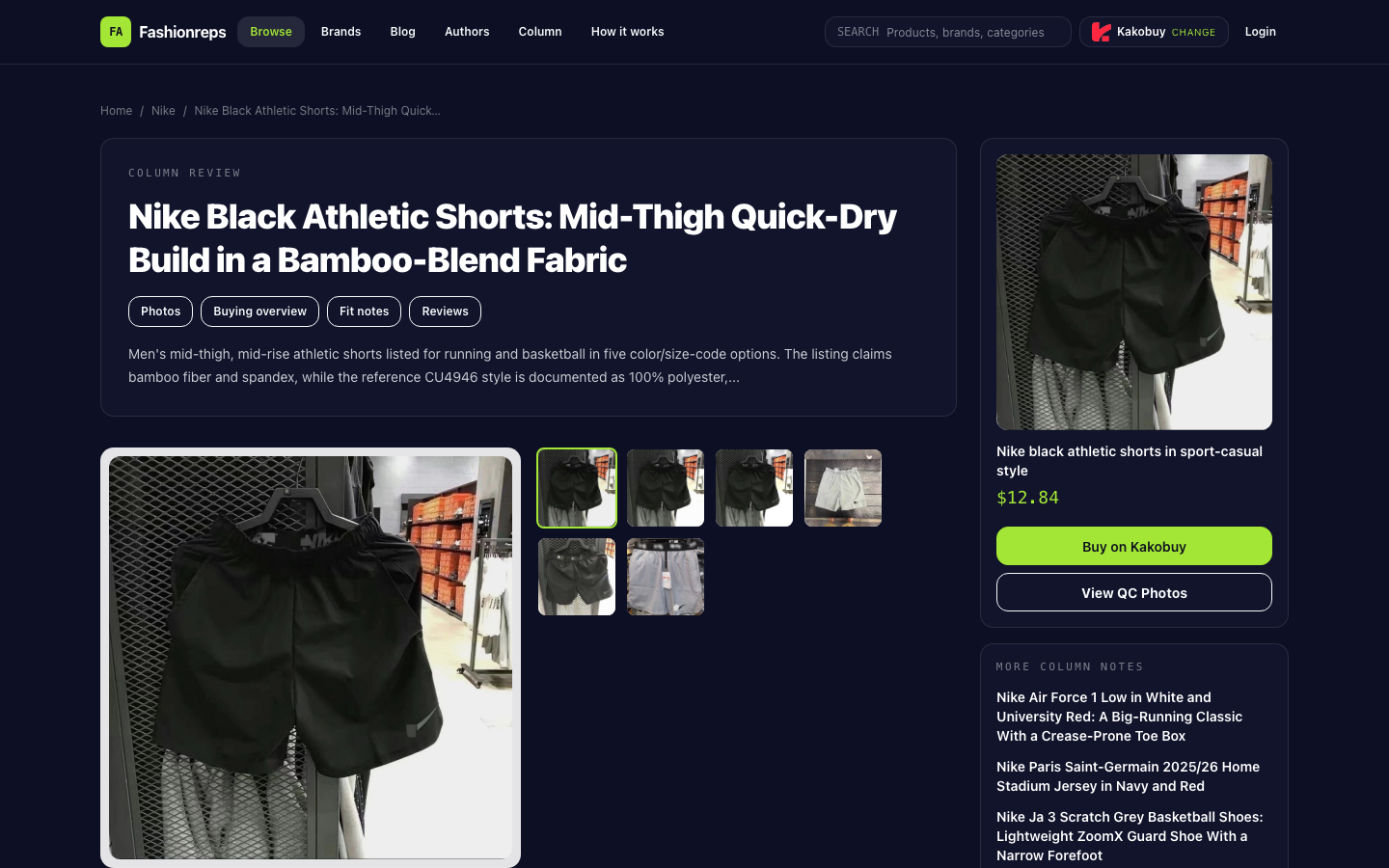
The page data also shows that the actual product photos failed to load. The image below is a screenshot of the product page and cannot replace actual inspection of the current product, nor can it prove that the fabric, workmanship, or sizing matches the reference style exactly.
Why You Can't Choose Solely by Weight
A weight-based size chart is good for an initial filter, but it doesn't tell you the waist, leg width, length, or crotch space. People with the same weight can have different waist, hip, and thigh measurements; and the comfort of athletic shorts usually depends on whether the waist is tight, whether there's room in the crotch, and whether the legs cling during movement.
The reference line feedback on the current page shows several different signals:
- Some buyers think the CU4946 reference line runs small; some even say they usually wear L but found L too tight.
- The information also includes feedback saying "fits true to size" at 67%.
- Another group of feedback says the actual fit is looser than labeled.
- The reference style is described as mid-rise, unlined, loose straight-leg, and mid-thigh length.
These results don't really contradict each other because they may come from different body types, different fit preferences, and different batches or variants. They do show that a size label alone cannot reliably predict fit.
Step 1: Measure a Pair of Shorts That Fits You Well
First find a pair of athletic shorts that feels comfortable at the waist and has the length and room you like. Lay the shorts flat without stretching, and record the following measurements:
- Waistband flat width. Measure the straight distance across the waistband and multiply by 2 for the approximate waist circumference.
- Hip or widest part of the body. Record the flat width to judge if there's enough room for sitting and running.
- Outseam length. Measure from the top of the waistband to the hem.
- Leg opening. Measure the flat width of the hem and multiply by 2 as a reference for leg room.
- Inseam length. If the seller can provide crotch data, compare it with your existing shorts; if not, don't infer it yourself.
It's best to measure two pairs of shorts that feel different: one more fitted, one looser. This helps you determine which fit you need rather than relying solely on weight ranges.
Step 2: Cross-Check Your Measurements with the Seller's Weight Chart
First use your weight to find a candidate size on the seller's chart, then do a second filter using the waist, length, and leg room of your existing shorts. If the two results agree, you can proceed to confirm details; if not, don't ignore waist and movement space just to "match the weight range."
The weight ranges on the page roughly go from 90–110 jin for size S to 160–180 jin for 2XL. Since these are ranges provided by the page, and the page also notes a 1–2 cm error, they are better used to narrow down candidates and cannot replace actual flat measurements.
If you're at the boundary of two ranges, or if you often feel the waist is tight in similar shorts, you should prioritize asking the seller for the actual waist, length, and leg opening of the current black variant before deciding whether to size up. The reference line has feedback about running small, but that doesn't necessarily mean the current product requires a size up.
Step 3: Confirm the Black Variant and Actual Fabric
Before ordering, it's best to send focused questions to the seller, avoiding just asking "Is the sizing accurate?" At least confirm the following:
- What specific style code corresponds to the black color.
- What is the actual fabric composition and percentage of the current black variant.
- What are the flat measurements of the current variant: waist, length, hip or leg opening.
- Whether there is a liner or built-in shorts.
- Whether the dimensions on the page apply to the current black variant and not other colors or style codes.
- Whether the size error is still about 1–2 cm.
Pay special attention to the fabric composition conflict. The page data lists bamboo fiber and spandex, but also notes that CU4946 reference style is recorded as 100% polyester. Until the seller confirms, you shouldn't treat bamboo fiber, stretch, or quick-dry performance as proven features of the current product.
When You Can Consider Proceeding
If you want mid-thigh length, loose straight-leg, mid-rise, unlined athletic shorts, and are willing to verify against the seller's current size chart and actual flat measurements, this product can be a candidate.
If your weight falls within a range and your existing shorts' waist and length are close to the seller-confirmed data, your size judgment will be more reliable than just looking at the page label. The see-through risk for black versus gray cannot be assumed to be zero, but reference materials mention thin fabric may be slightly see-through in strong light, with more feedback about gray; this is still reference style or line feedback, not actual measurement of the current black variant.
When to Skip for Now
If you encounter the following, it's best not to pay yet:
- The seller cannot confirm the style code for the black color.
- The seller only repeats the weight chart and cannot provide actual measurements like waist or length.
- You need a built-in liner, but the page doesn't clearly prove the current variant has one.
- You specifically care about bamboo fiber content, but the seller hasn't resolved the conflict between the page composition and the reference style data.
- You expect the exact same fabric, cut, or durability as authentic Nike Flex CU4946, but the current page doesn't provide enough evidence to support that.
Final Verdict
The sensible way to choose a size for these shorts is not "pick a size based on weight" but "initial filter with weight chart, cross-check with your existing shorts' measurements, and confirm variant details with the seller." The CU4946 runs small feedback can remind you to check waist room, but it alone cannot prove the current product must be sized up; the fabric listed on the page also cannot be taken as confirmed fact while the composition conflict remains unresolved.
If the seller can confirm the black variant, actual fabric, and key flat measurements, and you compare them with your existing shorts, the risk of choosing the wrong size will be significantly reduced. If this information cannot be confirmed, it's safer to wait than to order based on conflicting data.
Continue reading