From the blog
Kenzo Embroidered Sweatshirt QC: Pattern, Cuffs & Sizing
Before diving into QC inspection, first confirm which product the photos correspond to—don't rely solely on file names or page thumbnails. The currently availab...
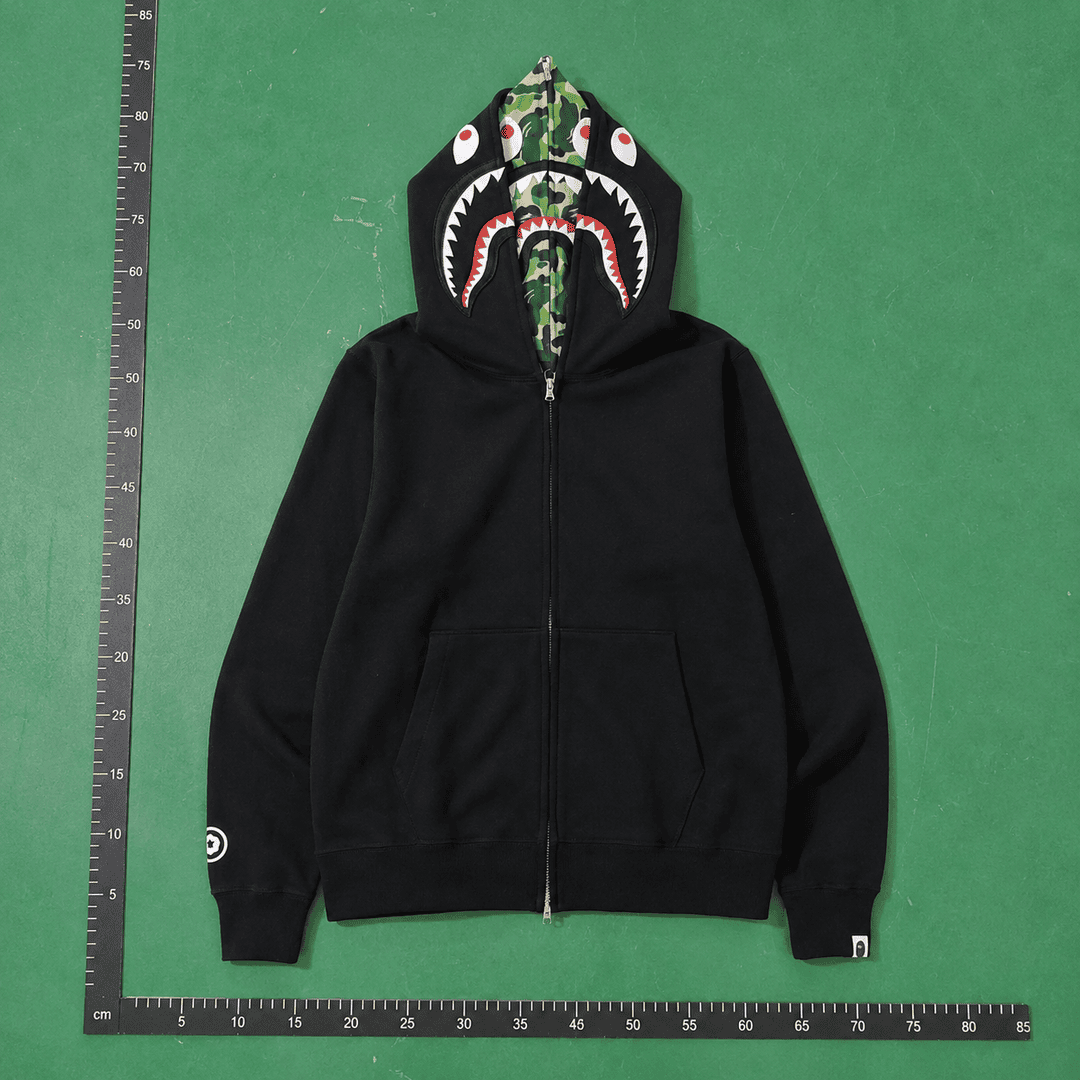
Before diving into QC inspection, first confirm which product the photos correspond to—don't rely solely on file names or page thumbnails. The currently available QC image evidence is actually labeled as a Bape embroidered zip-up hoodie, updated on September 26, 2026, not a Kenzo embroidered sweatshirt. Therefore, the inspection methods below can be used for Kenzo items, but you cannot directly treat the colors, sizes, embroidery positions, or flaw conclusions in this set of images as evidence for the Kenzo product. ⚠️
Specific Purchase Task for Kenzo Embroidered Sweatshirt QC Inspection
Your task is not to judge whether an image 'looks good,' but to confirm three things: whether the images belong to the target product, whether the images cover the areas you care about most, and whether the visible condition is sufficient to support proceeding with the purchase or pausing the order.
This article applies to situations where you have already entered the product detail page and are viewing the product's QC photo gallery through the 'View QC Photos' button on the page. It does not apply to pages that only have the main product image, category thumbnails, brand page images, or other product images, nor does it apply to scenarios that require judging authenticity, fabric feel, or long-term durability from low-resolution images.
After completing the inspection, you should be able to record:
- The product name and style corresponding to the images.
- Whether photos of the embroidery, collar, cuffs, body, and size are complete.
- Which situations are visible flaws and which simply cannot be confirmed from the images.
- Whether additional photos are needed, or whether to pause the purchase if evidence is insufficient.
How to Open View QC Photos from the Product Detail Page
First, verify the product title, style, color, and size range on the product detail page, then use the entry clearly labeled 'View QC Photos' on the page. Do not guess the QC address based on product numbers, image naming conventions, or other page paths, and do not treat adjacent products' images as photos of the target product.
After entering the gallery, first verify identity, then appearance:
- Record the product name, style, and color displayed on the page.
- Compare against the product detail page to confirm the gallery is not for a different color or link.
- Check whether the images show the full body, front embroidery, back, cuffs, collar, and size measurement area.
- If the page only shows partial images, mark it as insufficient evidence first; do not fill in missing areas with the main image.
- For any details that require zooming in to confirm, record them as 'needs additional photos' rather than directly judging pass or fail.
The public description of the currently available images clearly corresponds to a Bape multi-color camouflage zip-up hoodie and its embroidery details. It can demonstrate QC reading methods but cannot serve as physical verification images for the Kenzo embroidered sweatshirt.
What to Observe for Embroidery Pattern Position, Edges, and Colors
First, look at the position of the pattern relative to the body seams. The front embroidery should roughly match the design area shown on the product detail page; do not judge position differences as flaws solely due to different shooting angles. What needs to be recorded is whether the pattern clearly deviates from the chest, pocket, zipper, or side seams, and whether the left-right structure shows obvious asymmetry that cannot be explained by posture.
Then look at the embroidery edges:
- Are there large areas of loose threads or obvious broken stitches at the edges?
- Does the outline have irregular gaps, overlaps, or stitches that go outside the pattern area?
- Are there severe thread buildup, exposed base fabric, or obvious holes in dense areas?
- Are the pattern colors affected by lighting, white balance, or shooting angle?
- Does the embroidery cover the zipper, pocket opening, or other structural parts?
Colors can only be recorded as visible in the photos. Do not judge actual color differences based solely on screen display, and do not write brand colors, official color codes, or authenticity conclusions into the QC judgment. If the product page does not provide a clear color description, the safest way to record is 'the image shows a certain tone; the actual color is subject to receipt.'
How to Record Visible Condition of Collar, Cuffs, and Body Structure
The collar and cuffs are easily overlooked areas because photos often only show the front. During inspection, look for at least one image that clearly shows the ribbing, seams, and edge condition.
Key observations:
- Is the collar ribbing obviously twisted, wrinkled, or partially stretched?
- Are the cuffs obviously different in elasticity between left and right?
- Are there broken stitches, skipped stitches, or long thread ends at the cuff seams?
- Are the shoulder seams, side seams, and sleeve attachment points clearly misaligned?
- Is the body temporarily wrinkled due to uneven laying, pressing, or shooting posture?
Minor wrinkles cannot be directly equated with deformation. Only when multiple photos from different angles show the same area persistently skewed, pulled, or asymmetric should it be recorded as a risk for additional photos or after-sales. The inner seam allowances, elastic recovery, and wearing comfort that are not visible in the photos should be clearly marked as unconfirmable. 🧵
How to Cross-Check Size Photos with the Product Page Size Chart
Do not just look at the size label, and do not treat the recommended height/weight on the product page as actual measurements. Compare the QC size photos with the product page size chart, prioritizing the items actually provided on the page, such as chest width, length, shoulder width, and sleeve length.
| Check Item | Evidence to Record | Conclusion That Cannot Be Directly Drawn |
|---|---|---|
| Measurement Position | Start and end points of the tape measure and the flat lay state of the garment | Cannot guarantee fit or wearing comfort based on this |
| Product Page Size | Corresponding color, size, and measurement values stated on the page | Cannot apply size charts from other colors or styles |
| Measurement Difference | Difference between QC photo reading and product page value | Cannot judge as necessarily failing without considering the page's stated measurement tolerance |
| Fit Judgment | Compare with flat measurements of your own sweatshirts | Cannot infer that it must run large or small based solely on brand name |
If the page explicitly states a measurement tolerance of 1 to 3 cm, record it as a page condition rather than expanding or shrinking the tolerance on your own. Ensure units are consistent when comparing, and confirm that the size label in the photo matches the order selection.
For Kenzo items, especially avoid using size conclusions from other brands or styles. The currently provided QC evidence page describes a Bape product, listing sizes M to XXXL with corresponding measurement tolerances, but this information cannot be transferred to Kenzo.
How to Classify Threads, Stains, Deformation, and Blocked Areas
To avoid lumping all issues into 'poor quality,' classify by evidence strength:
- Visible Flaw: Directly visible in clear images, and not obviously caused by folding or lighting, such as loose threads, stains, damage, or structural offset.
- Suspected Flaw: Too dark, reflective, blocked, or low resolution locally, making it impossible to rule out photographic factors.
- Insufficient Structural Evidence: Inner seams, cuff close-ups, back, or complete size measurement area not photographed.
- Insufficient Page Information: The product page does not provide corresponding color, size, material, or measurement instructions.
- Facts Not Provable by Images: Feel, smell, warmth, wash durability, long-term fading, and authenticity cannot be confirmed solely from QC images.
When inspecting stains, distinguish shadows, pressure marks, and actual color changes. When inspecting deformation, compare body edges, seam directions, and multiple angles rather than just looking at one stretched flat lay photo. When inspecting blocked areas, write directly 'this area is not shown' instead of inferring from adjacent photos.
If the product has obvious issues, first save the corresponding images and page information, then contact the shopping agent or seller to confirm handling. Whether returns, exchanges, additional photos, or cancellations are possible should be based on the actual platform policy and order status, not on a single QC page photo. 📸
How to Request Additional Photos When QC Images Are Insufficient
Additional photo requests should be specific to the area, angle, and purpose, avoiding just saying 'please make it clearer.' You can organize them in the following format:
- Product: Fill in product name, color, and size.
- Area: For example, the lower right edge of the front embroidery, the inside of the left cuff, or the back collar seam.
- Angle: Request front flat lay, close-up, natural light or even lighting, and state whether the back is needed.
- Purpose: Confirm loose threads, stains, pattern position, seam integrity, or size readings.
- Basis for Judgment: Explain which piece of information on the product page it needs to be cross-checked with.
Do not request full order details, payment cards, passports, addresses, or complete shipping labels. If you need to show an order screenshot, cover personal information and keep only the fields needed to confirm the product and size.
If key areas cannot be confirmed even after additional photos, mark the order as paused instead of filling in evidence with speculation. For cases where the gallery and product name do not match, prioritize requesting confirmation of image ownership; before ownership is confirmed, the images should not be used for Kenzo product judgment.
Final Action: Complete the Kenzo QC Checklist and Decide to Proceed or Pause
Before placing the order, you can complete the final check in the following order:
- The product detail page and QC gallery show the same product, style, and color.
- The embroidery position, edges, and color condition are supported by clear images.
- The collar, cuffs, body seams, and key structures are not completely blocked.
- The size photos correspond to the selected size and can be compared with the product page size chart.
- All flaws are distinguished as visible, suspected, or unconfirmable.
- Specific requests have been made for areas needing additional photos.
- Judgments on returns, cancellations, and after-sales are based on actual order policies.
The current image evidence does not match the Kenzo target, so it cannot be used to confirm the embroidery, cuffs, or size condition of the Kenzo sweatshirt. The safest action is to pause using this set of images, return to the Kenzo product detail page, and re-verify through that product's own View QC Photos entry. Only when the product identity, key areas, and size evidence are consistent is it appropriate to proceed with the order or move to the next step in shipping arrangements.
Continue reading