From the blog
How to Check Goyard Luggage QC Photos: Wheel, Zipper & Size
The Goyard Luggage QC Photo Verification Problem This Article Solves Before buying, what you really need to confirm isn't whether the photos look "authentic," b...
The Goyard Luggage QC Photo Verification Problem This Article Solves
Before buying, what you really need to confirm isn't whether the photos look "authentic," but whether this set of QC photos actually corresponds to the goyard luggage you plan to buy, and whether they are sufficient to proceed with payment, request additional photos, or pause the order.
This article only discusses visible evidence: the product name on the detail page, the View QC Photos entry, the shell and corners, zippers, telescopic handle, wheels, size photos, and visible flaws. QC photos cannot prove authenticity, nor guarantee that later shipping won't cause damage. This applies to buyers who have already entered a specific product detail page and are ready to view warehouse photos; if the page lacks a clear product name or you can't open the corresponding QC gallery, you should pause judgment first. 🔍
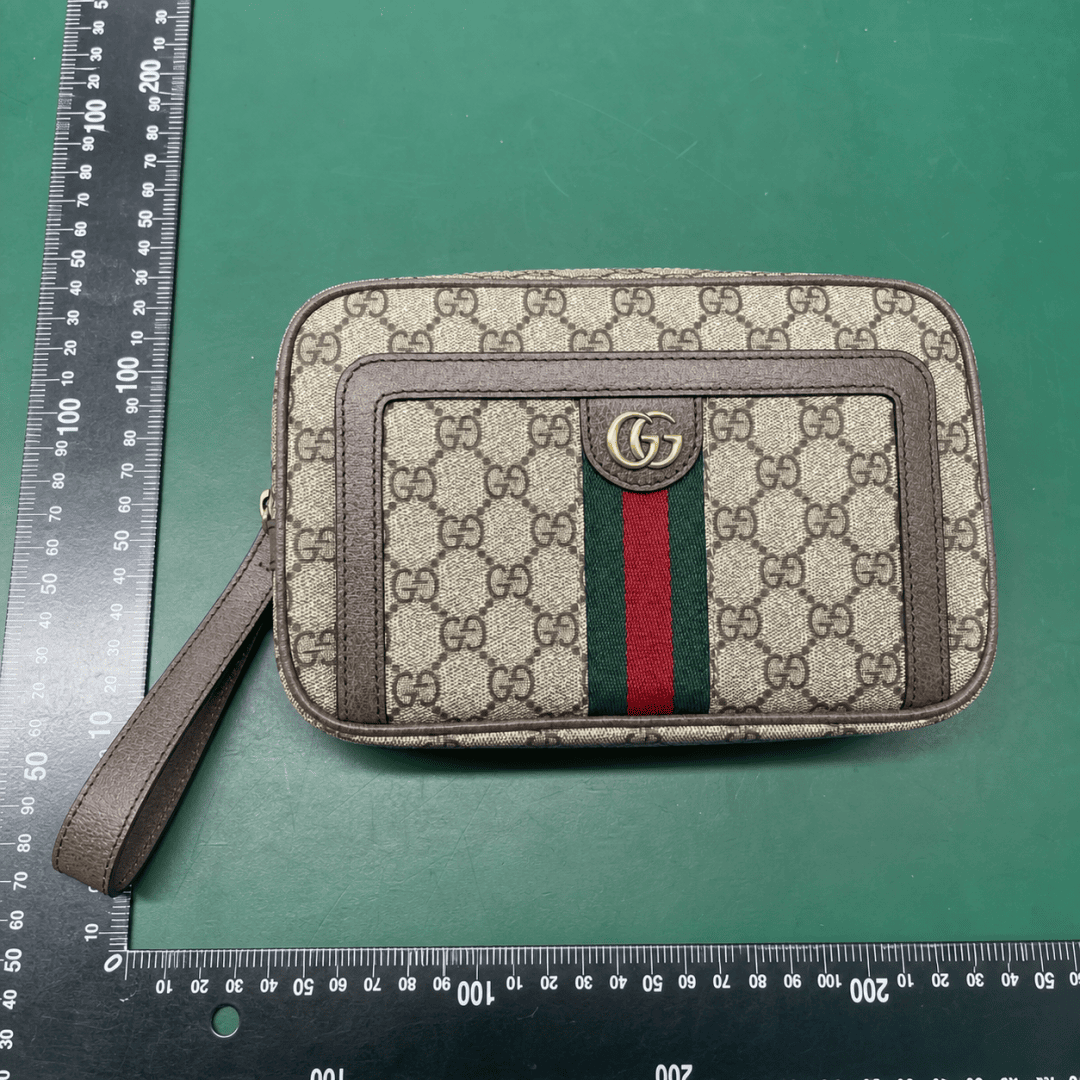
Currently available image evidence has a product mismatch problem: the provided image source description corresponds to a Gucci Green Ophidia-Style Zip Pouch, not a goyard suitcase. Therefore, this image cannot be used as evidence of the goyard luggage's shell, wheels, zipper, or size, and no purchase conclusion should be drawn from it.

Public caption: The current image does not match the target product and should not be used as goyard luggage QC evidence.
Enter the Specific Product Detail Page and Open View QC Photos
First, verify the product name, category, and product description on the specific fashion-reps product detail page. The target should be a goyard suitcase, not a brand page, search results page, category page, or other product page.
After entering the detail page, click the button called View QC Photos. Do not guess the QC gallery URL based on the address format, and do not substitute QC photos from another product. When confirming that the images belong to the target product, at least check the following:
- The detail page product name clearly includes the suitcase or corresponding model information.
- The View QC Photos button is located within that product's detail area.
- The opened gallery matches the current product's color, shape, size, or configuration.
- The images are not the homepage, brand page, category page, or another product's main image.
- The gallery contains original QC photos that sufficiently show appearance, hardware, and size.
If the page shows a Gucci pouch, another brand's suitcase, or the product name doesn't match the pictured item, record the status as "evidence mismatch" rather than zooming in to look for details. ⛔
How to Inspect Suitcase Shell, Corners, and Surface Pattern by Area
Once you have the correct goyard luggage QC photos, inspect them area by area, not just one overall shot. It's recommended to save observation records in the order of "front, back, left, right, top, bottom, four corners."
Shell inspection focuses on:
- Whether the color remains consistent under different lighting, or if a certain area appears noticeably darker, lighter, or grayish.
- Whether the surface pattern has obvious breaks, misalignment, ghosting, indentation, or partial coverage.
- Whether seams, edging, and corners show cracking, lifting, deformation, or unevenness.
- Whether large surface areas have scratches, stains, pressure marks, creases, or abnormal reflections.
- Whether protective film, packaging straps, or obstructions block key areas.
These observations only indicate what's visible in the photos and cannot directly infer material grade, durability years, or authenticity. Color may also be affected by photographic lighting, white balance, and screen display, so record "photo color difference" and "actual color difference" separately. 📷
If the pattern is obscured by a folded corner in one image, check adjacent angles; if adjacent angles still can't determine it, record as "insufficiently shown," don't fill in conclusions yourself.
Zipper, Telescopic Handle, and Wheel Details to Record
For zippers, examine the zipper pull, teeth, both end connections, and nearby fabric or edging. Record whether there's obvious crookedness, missing teeth, loose threads, pull damage, wrinkled edges, or uneven stitching. A single static QC photo usually can't prove smooth zipper operation, so don't write "zipper closes properly" as "zipper has been tested for smoothness."
For the telescopic handle, inspect the base, shaft surface, button area, and gaps between telescoping sections. Distinguish two types of information: visible scratches, dents, or deformation are appearance evidence; whether the handle extends and retracts smoothly requires an explicit operation video or warehouse confirmation—static images cannot fully prove it.
For wheels, examine all four wheel positions, wheel frames, wheel surfaces, and the connection between wheel frames and the suitcase body. Record:
- Whether each wheel position was photographed.
- Whether wheel surfaces have obvious cracks, chips, foreign objects, or abnormal wear.
- Whether wheel frames are crooked and connections show visible looseness or deformation.
- Whether any wheels are obscured by the body, packaging, or camera angle.
If only two wheels are shown, you cannot infer the other two are in the same condition. If smooth movement is critical to you, request additional close-up wheel photos or operational confirmation from the warehouse before payment. 🧳
How to Cross-Check Size Photos with Product Page Spec Fields
Product page spec fields and QC size photos are not the same evidence. Spec fields may be nominal dimensions provided by the seller; tape measure photos show warehouse measurements of a physical item. Record them separately—do not substitute one for the other.
| Check Item | Visible Evidence | Handling |
|---|---|---|
| Product page size | Detail page spec field | Record original values, unit, and verification date |
| Physical length, width, height | Tape measure or measuring tool in QC photo | Record start point, end point, and any obstruction |
| Whether wheels and handle included in size | Photo angle and measuring range | Mark as insufficiently shown if unclear |
| Size difference | Comparison of nominal vs measured | Confirm tolerance and return/exchange conditions with seller |
Measurement photos should ideally show the suitcase edge, tape measure markings, and measurement direction simultaneously. If the markings are blurry, the start point is obscured, or the photo only shows numbers without the full measuring range, record only as "size photo exists, but insufficient for verification."
Whether a size difference matters depends on airline or shipping route baggage limits, packaging method, and seller's promises. Don't conclude from one photo that it can definitely be carried on or won't incur extra fees; separately verify destination country, carrier, and applicable dates. Fees, taxes, and route rules are time-sensitive facts and should be reconfirmed before publishing or ordering. 📏
How to Categorize Scratches, Stains, Deformation, and Photo Obstructions
To avoid mixing minor appearance issues with functional problems, use four categories:
- Visible minor flaws: Confirmed in photos but not currently shown to affect use, such as small local scratches or light stains.
- Potentially functional: Located on zippers, handle, wheel frames, joints, or structural edges; may need additional photos or operational confirmation.
- Structural anomalies: Obvious deformation, cracking, corner collapse, misaligned connections, or large pressure damage.
- Cannot determine: Obscured, overexposed, out of focus, insufficient angle, or no photo of that area.
When recording, specify location, photo number or angle, visible phenomenon, and next action. For example: "Continuous creases visible on right rear corner, but not shown whether it affects suitcase closure; request additional photos of closed state and corner close-up." This is easier for warehouse or seller to handle than "average condition."
Don't mistake shadows in photos for stains, or reflections for scratches. If the same flaw appears repeatedly at different angles, it's more credible than an anomaly appearing only in one overexposed photo; but this is still a photo-level judgment, not a real touch or durability test result.
How to Request Additional Photos and Set Pause Conditions When QC Images Are Insufficient
Additional photo requests should be specific to area and purpose, not just "please take clearer photos." You can request:
- Close-ups of all four corners, bottom, wheel frames, and wheel surfaces.
- Close-ups of zipper ends, zipper pull, handle button, and base.
- Full front, back, and side views to verify pattern and color.
- Length, width, and height photos with tape measure showing start and end points.
- Close-ups and repeated photos in normal lighting for suspected scratches, stains, or deformation.
- If zipper, handle, or wheel function needs confirmation, request warehouse operational confirmation, not just static images.
Before additional photos are completed, set pause conditions: target product name still unclear; QC images still belong to another product; key wheel or zipper areas persistently obscured; size photos can't show measuring range; or anomalies possibly affecting structure and function are found without resolution.
After receiving additional photos, still save original images, request content, response time, and final decision. Don't overwrite original evidence with later blurry screenshots, and don't delete disputed photos. 📝
Final Action: Save Goyard Luggage Evidence and Decide to Proceed or Pause
Under current evidence, you cannot continue to judge the goyard luggage's wheels, zipper, shell pattern, or size because the provided image corresponds to a Gucci Green Ophidia-Style Zip Pouch, not the target suitcase. Before proceeding with payment, re-enter the correct goyard product detail page, open the corresponding gallery via View QC Photos, and complete the area checks above.
When saving records, at minimum keep product name, QC gallery entry, image capture date or page verification date, visible flaws, size photos, additional photo requests, and seller responses. Product price, inventory, shipping cost, taxes, return window, and route restrictions should also be reconfirmed according to destination country and currency before ordering.
Proceeding is only suitable when: the target product clearly matches QC images, key areas have clear photos, known flaws don't affect your usage, size fits shipping restrictions, and the seller provided a clear, saveable response on additional photos or after-sales service.
Not recommended to proceed when: unable to confirm images belong to this product; wheels, handle, or zipper persistently obscured; size can't be verified; unexplained structural deformation exists; or seller refuses to provide necessary additional photos and handling information. What's saved here isn't a fixed amount, but by pausing a wrong order, you avoid bearing product cost, international shipping, taxes, and return processing costs; the trade-off is waiting for additional photos or giving up a product that cannot be fully verified.
Article Image
Continue reading