From the blog
goyard Bag Merge Shipping: Verify Packaging & Weight
When preparing a goyard bag for combined shipping, the easiest things to overlook are not the goods themselves, but the packaging condition, outer box dimension...
When preparing a goyard bag for combined shipping, the easiest things to overlook are not the goods themselves, but the packaging condition, outer box dimensions, and chargeable weight. Before consolidating, don't just look at the gross weight on the product page, and don't treat the warehouse's estimated freight as the final cost. First record the confirmed information, then list the items that need to be confirmed by customer service or the checkout page.
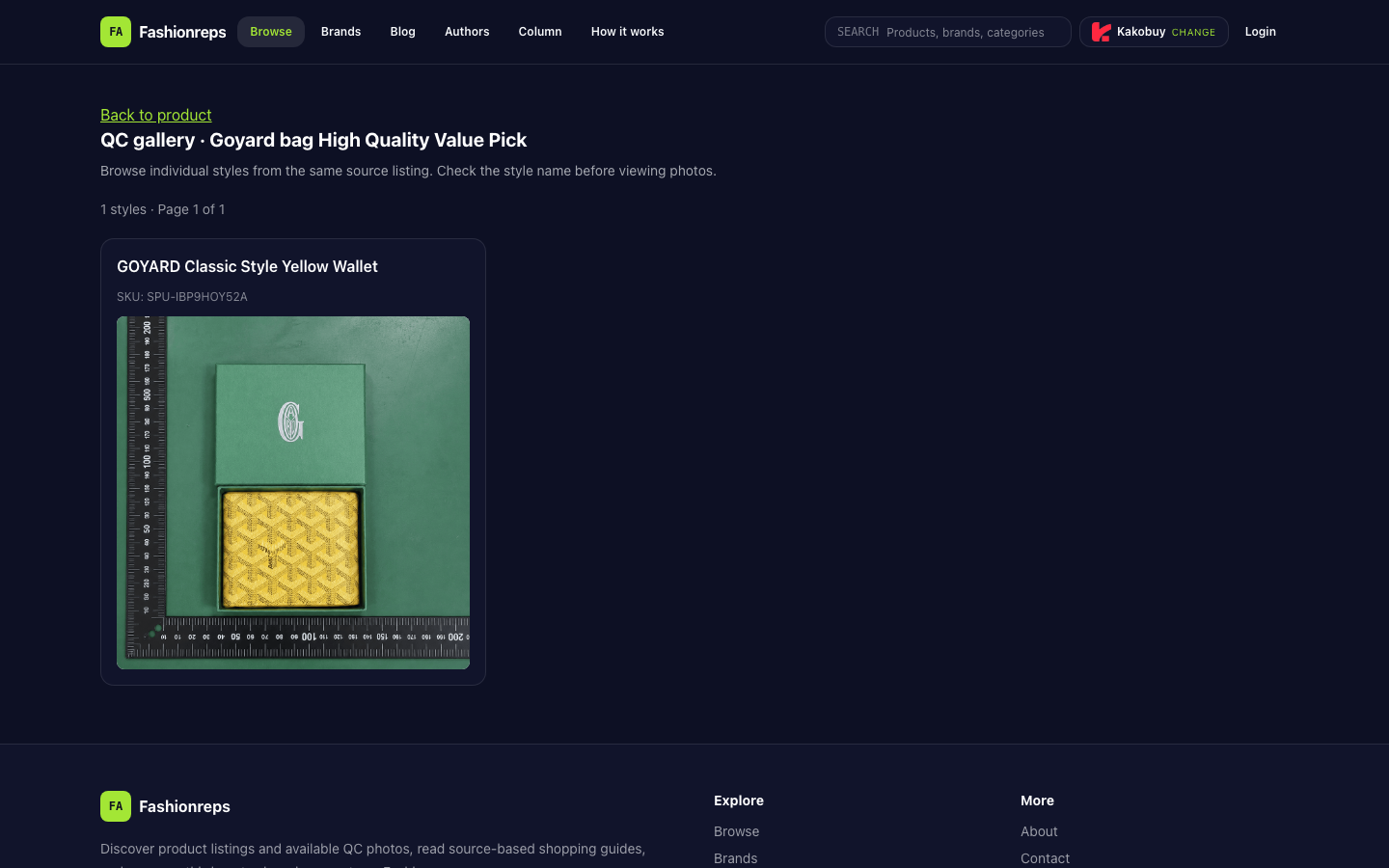
Image: Fashionreps page screenshot, for illustration of verification entry only, not representing the actual bag, packaging, or tested weight.
First Confirm the Product Record Really Corresponds to the Bag
First check whether the style name, color, variant, SKU, quantity, and packaging description on the product page or warehouse record are consistent. The verified QC page currently shows "GOYARD Classic Style Yellow Wallet" with SKU SPU-IBP9HOY52A, which cannot prove the existence of a goyard bag, nor can the information on that page be directly applied to bag dimensions, weight, or packaging.
Therefore, if your order is indeed for a bag, you should rely on the corresponding product page, warehouse inbound photos, and package measurement results. If the page only shows wallets, accessories, or other small items, stop using that page as the basis for bag purchase or shipping.
Record Four Groups of Information Before Consolidation
1. Product Itself Information
Record the following fields, and keep screenshots of the product page or warehouse:
- Style name and color
- Variant or size options
- Quantity
- Dimensions, weight, and packaging descriptions visible on the product page
- Product condition after warehouse inbound
- Whether it includes shoulder strap, tags, dust bag, or other accessories
If the product page does not provide a field, mark it as "not provided" and do not estimate based on common styles or image proportions.
2. Original Packaging Information
Ask the warehouse to confirm whether the bag currently retains original packaging, and distinguish between:
- Product only
- Product plus dust bag
- Product plus box or lining
- Product plus paper bag, tags, or other attachments
- Already used warehouse outer protective materials
"With packaging" is not a precise enough record. Different packaging combinations will affect actual weight, outer box dimensions, and route restrictions. If you care about volume or appearance protection, explicitly ask customer service to specify which materials are retained, removed, or replaced.
3. Outer Box Information After Consolidation
After consolidation, require the warehouse to reconfirm:
- Outer box length, width, height, with units noted
- Actual package weight, with units noted
- Whether an oversized box, double-wall carton, or extra padding was used
- Whether there are multiple packages instead of one combined package
- Any oversize, overweight, over-volume, or special packaging alerts
Pre-consolidation estimates for individual items cannot replace post-consolidation measurements. Especially for space-consuming items like bags, outer box dimensions may affect final billing more than the product's own dimensions.
4. Checkout Page Fee Information
Before final payment, check item by item on the destination site's checkout page:
- Chargeable weight or chargeable volume
- Route name and destination
- International shipping fee
- Packaging or reinforcement fees
- Storage, handling, or repacking fees
- Optional insurance and its applicable conditions
- Exchange rate, payment processing fee, and actual debit currency
The currently provided source only proves that a corresponding QC page and third-party shopping agent entry exist on Fashionreps, and does not provide actual dimensions, weight, destination, route quotes, or packaging charges for this bag. Therefore, specific shipping costs cannot be calculated from existing evidence, nor can it be confirmed that a certain route will accept this package.
How to Determine if Chargeable Weight Needs Follow-Up
After seeing the weight provided by the warehouse, first confirm which type it is: product net weight, actual package weight, estimated weight, or chargeable weight used by the route. If the page only shows a number without explaining the basis, contact customer service for confirmation.
If the checkout page shows both actual weight and volumetric weight, confirm whether the route uses the higher of the two or has other billing rules. Do not determine the final cost solely from outer box dimensions, because different routes may have different calculation methods, first and additional weight, volumetric coefficients, and restrictions.
Also check whether weight units are consistent. Mixing grams and kilograms, centimeters and inches can easily cause recording errors. It is recommended to save warehouse raw data, checkout page data, and final payment amount separately, and do not replace original values with manually rounded numbers.
Three Types of Information Should Be Handled Separately
Verified information includes: styles or variants clearly displayed on the product page, outer box dimensions actually measured by the warehouse, warehouse weighing results, and routes and fees already shown on the checkout page.
Information requiring customer service confirmation includes: whether original packaging can be removed, how reinforced packaging is charged, whether outer boxes can be changed, whether there are oversize restrictions, whether re-measurement will occur after consolidation, and which value to use when checkout page weight differs from warehouse weighing.
Information that cannot be inferred includes: estimating weight from images alone, judging package dimensions from product name alone, calculating shipping costs from other orders, judging bag quality or packaging from one QC page, and treating estimated fees as final debit amounts.
Consolidate, Keep Original Packaging, or Hold Shipment
Conditions for continuing consolidation: product record matches actual order, warehouse has provided post-consolidation outer box dimensions and actual weight, target route accepts that size and weight, checkout page shows complete fees, and you accept the impact of packaging removal or reinforcement.
Conditions for keeping original packaging: the packaging itself has preservation value to you, warehouse confirms that keeping it will not trigger unacceptable oversize or route restrictions, and checkout page clearly shows the resulting billing impact. Do not assume original packaging is always worth keeping just because "it might be safer."
Situations to hold shipment: page records do not match actual product; only estimated weight without post-consolidation actual measurement; outer box dimensions, chargeable weight, or route restrictions are not clearly stated; checkout page shows unexplained extra fees; or the source page only corresponds to wallets or other categories and cannot be proven relevant to your bag order.
Before final payment, you should obtain at least one set of corresponding records: correct product and variant, post-consolidation outer box dimensions, actual weight, chargeable weight basis, destination, route name, packaging handling method, and total checkout page fees. If any item is missing, gather evidence first before deciding to submit the shipment.
Continue reading