From the blog
Fear of God Essentials Shorts Sizing: Fleece vs Terry
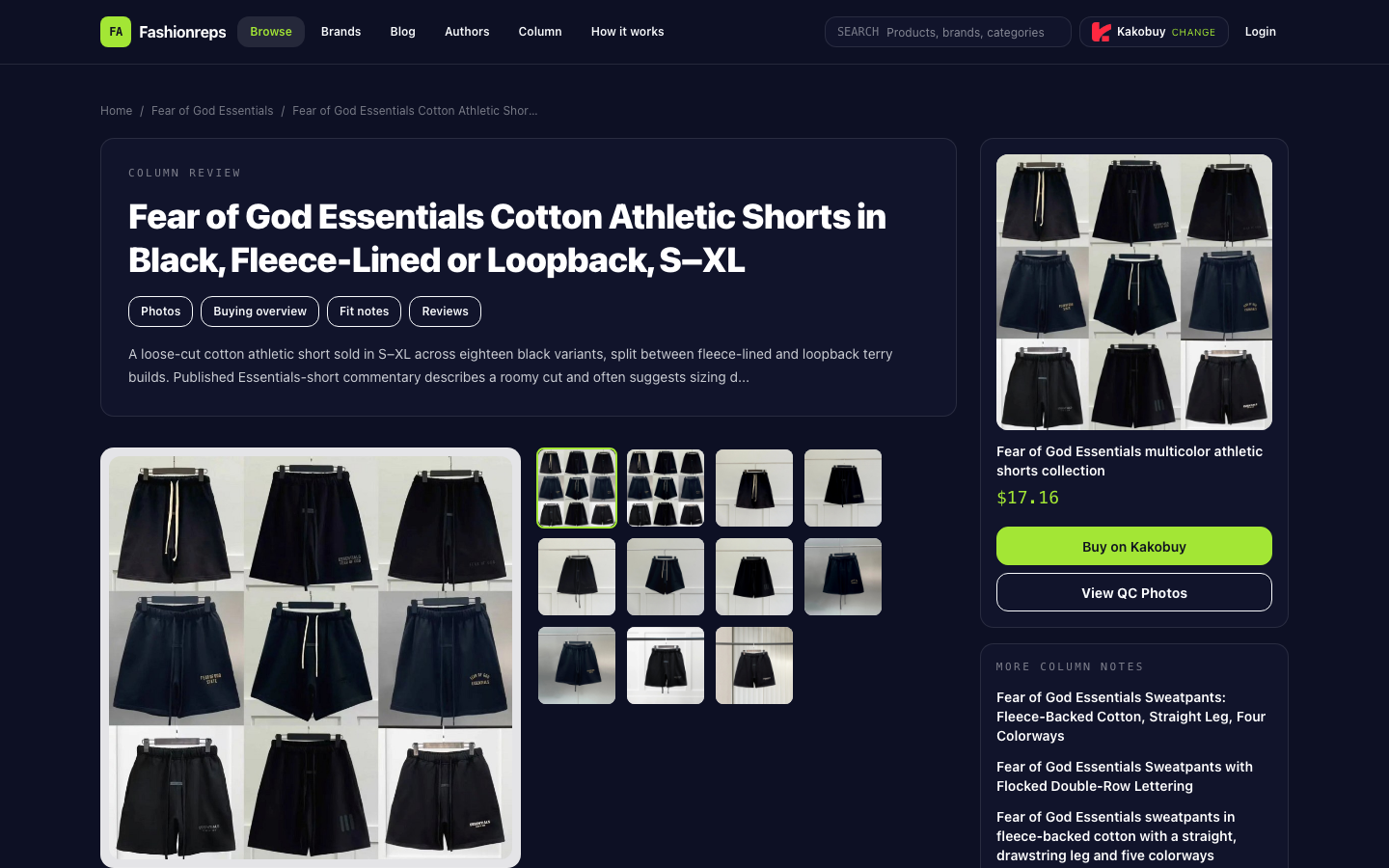
This Fear of God Essentials shorts page shows sizes S–XL. The catalog splits the versions into fleece-lined and loopback terry, and the color is currently liste...
This Fear of God Essentials shorts page shows sizes S–XL. The catalog splits the versions into fleece-lined and loopback terry, and the color is currently listed as a black variant. The page info can help narrow things down, but it doesn't provide a numeric waist chart or prove that every variant has the same actual thickness, inseam, or fit. So the key isn't just buying your usual letter size—it's confirming the actual measurements for the specific variant first.
What the page evidence actually tells you
The page describes these shorts as cotton with a relaxed fit and lists four letter sizes: S–XL. The catalog also lists 18 black variants, each tied to either fleece-lined or loopback terry construction. 'Relaxed' here comes from the product catalog and related series feedback, not proof that every variant has the same waist, leg width, or inseam.
The page doesn't give a numeric waist chart, so you can't tell from S, M, L, XL alone what waist size in centimeters they'll fit. The related series' retail size guides and reviews usually describe the cut as roomy with extra give, and some people suggest sizing down. But other buyers say the series can run small. That's conflicting feedback, so don't treat 'size down' as a definite rule for this specific item.
How to compare fleece-lined vs. loopback terry
| What to check | Fleece-lined version | Loopback terry version |
|---|---|---|
| What the page confirms | Catalog labels it fleece-lined | Catalog labels it loopback terry |
| Season judgment | The name alone doesn't confirm actual warmth—ask the seller and check detail photos | The name alone doesn't confirm actual thickness—ask the seller and check detail photos |
| Sizing judgment | Don't switch sizes just because it's fleece-lined; still check the specific waist and inseam | Don't switch sizes just because it's terry; still check the specific waist and inseam |
| Minimum evidence before ordering | Waist, inseam, inside fabric photos, and QC pics for the specific variant | Waist, inseam, inside fabric photos, and QC pics for the specific variant |
If you'll mostly wear these in fall and winter, fleece-lined can be your first thing to ask about, but the current page gives no weight, liner structure, or warmth testing, so you can't claim it's definitely warmer. Likewise, terry can't be assumed thinner or better for transitional seasons just from the name. What actually helps is asking the seller to describe the inner feel and structure, and to provide close-up photos of your chosen color and size.
A reliable way to pick a size based on waist
Take a pair of shorts that fits you well, lay them flat, fasten or straighten the waist, and measure the straight distance across the waistband from left to right with a soft tape. Multiply that by two to get the flat waist measurement. Then measure from the crotch seam intersection down to the hem for an approximate inseam. When measuring, note whether the shorts have a drawstring or elastic waist, and whether you measured them relaxed or slightly stretched.
Send these two numbers to the seller and ask them to confirm for the specific variant:
- The flat waist or wearable waist range for each size: S, M, L, XL.
- The inseam, and where they start and end the measurement.
- Whether the waistband has noticeable stretch and if the drawstring is adjustable.
- Actual inside photos of the fleece-lined or terry version, so you're not going by the title alone.
- Whether QC photos are available for the black variant you want to buy.
If the seller just says 'buy your usual size' without giving numbers, don't take that as size confirmation. Especially when the page has no numeric size chart and series feedback conflicts on running big or small, actual measurements matter more than generic advice.
A practical step-by-step process
First, decide whether you want fleece-lined or terry, and save the exact variant name. Don't just save 'black shorts,' because the page lists multiple black variants.
Second, measure the flat waist and inseam of a well-fitting pair you already own. If you prefer a baggy fit, also note how much extra room your current shorts have at the waist and legs.
Third, compare your measurements with the seller's data for the specific variant, item by item. A good waist but a clearly different inseam can still change how they feel; likewise, a similar inseam doesn't replace waist confirmation.
Fourth, ask the seller to confirm QC photos for your chosen variant. The photos should show the size tag, waist construction, inside fabric, and overall workmanship. But QC photos only help you check the exact item you'll receive—they don't replace the seller's numeric measurements.
Fifth, confirm the final item price, service fee, and international shipping before paying. The $17.16 shown on the page is just a reference price; the actual item price, service fee, and international shipping need to be confirmed on the shopping agent platform. Don't treat the reference price as the final cost.
When to buy and when to skip
If you're fine with relaxed athletic shorts, willing to confirm waist and inseam first, and can get the seller to explain the fleece or terry structure, this page can be a starting point for narrowing down specific variants. It also shows S–XL and multiple black variants, so the selection is fairly clear.
If you need a slim or tapered fit, want colors other than black, or don't want to verify numeric measurements before ordering, hold off. The current evidence isn't enough to guarantee consistent sizing across variants, nor to judge real seasonal suitability from the 'fleece-lined' or 'terry' labels alone.
The final sizing advice can be summed up as: first, find the closest match based on the actual waist and inseam of shorts that fit you well; then use the series-level 'roomy, maybe size down' feedback as a secondary reference—not a hard rule for switching sizes.
Continue reading