From the blog
chrome hearts Silver Jewelry Tarnish Guide
First, Look at What the Product Page Actually Says This product page shows a set of silver chains and bracelets. The page lists the size as 60, but does not spe...
First, Look at What the Product Page Actually Says
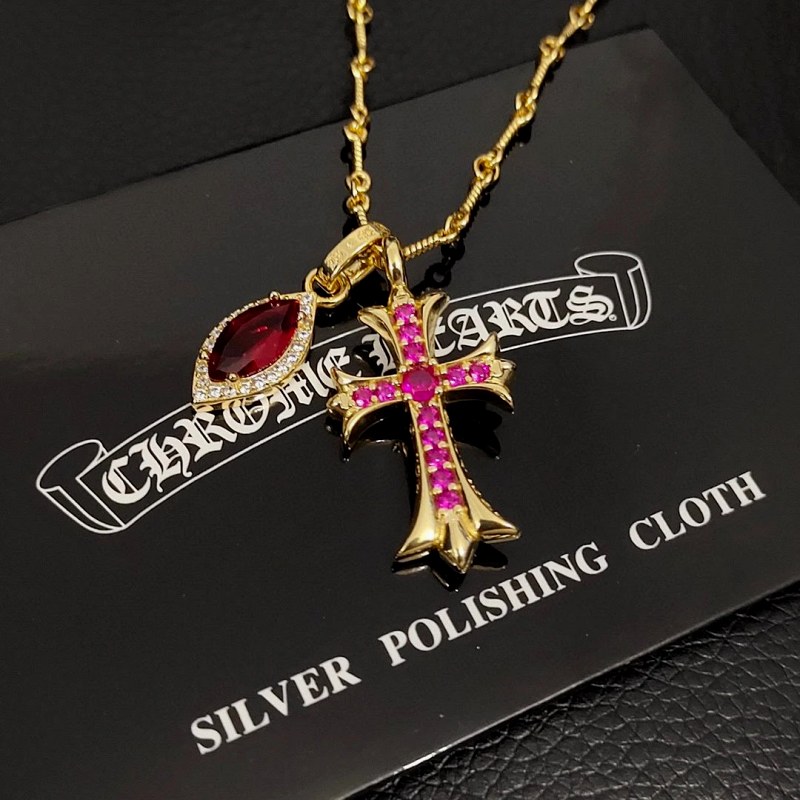
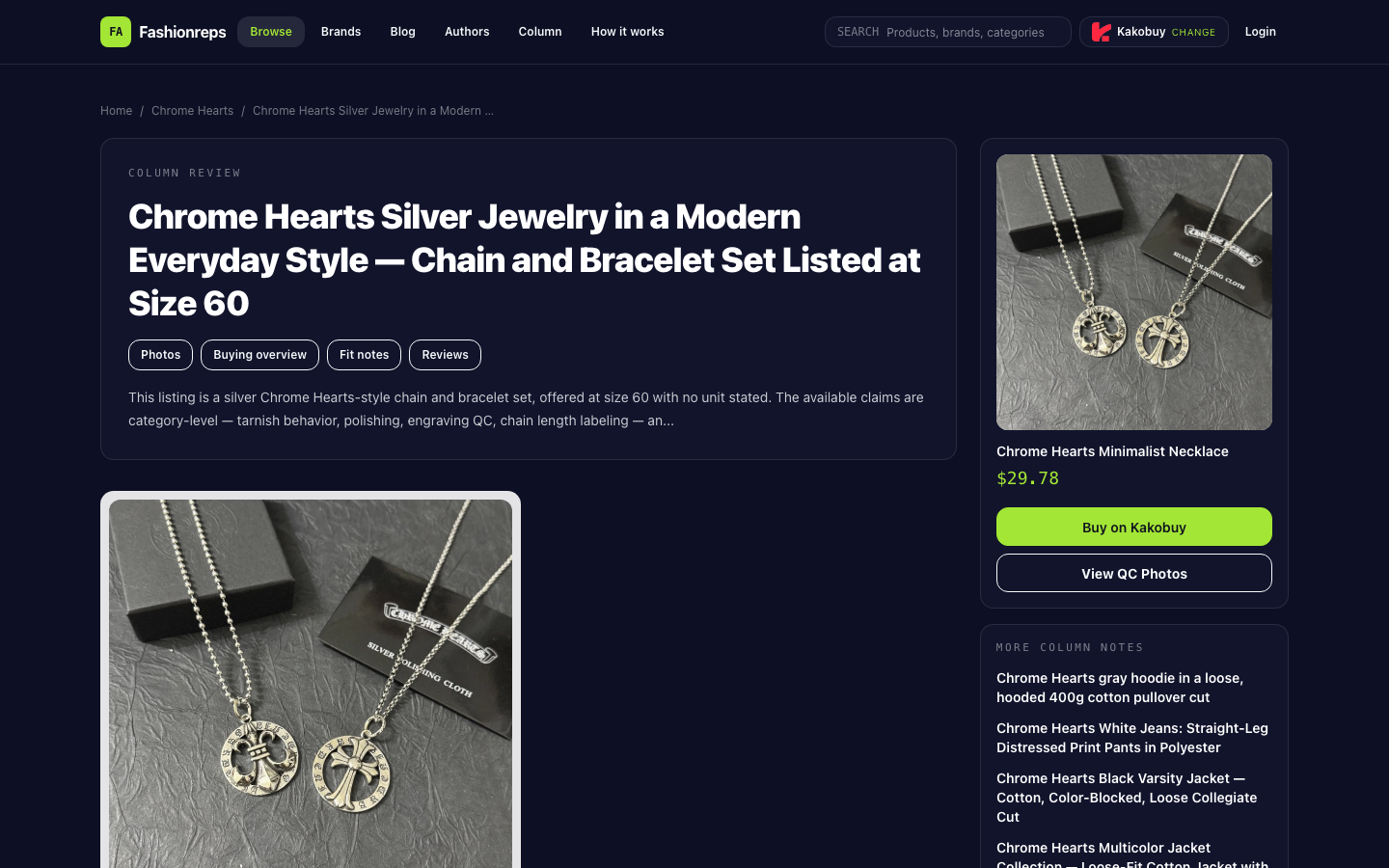
This product page shows a set of silver chains and bracelets. The page lists the size as 60, but does not specify the unit, nor does it clarify silver content, specific dimensions, or surface treatment in the available information. The page gives a reference price of $29.78. The final product price, service fee, and international shipping need to be confirmed by the shopping agent platform; you cannot judge the total cost based solely on the reference price.
The page does not provide any actual evidence that this item has tarnished, is prone to tarnishing, or has undergone anti-tarnish treatment. Therefore, the following content about sulfurization, moisture, and skin oils is only a general care guide for silver jewelry, and cannot be taken as a material test result for this specific item.
Why Silver Chain Jewelry May Gradually Darken
Changes in silver jewelry's surface are usually related to the surrounding environment and how it is worn. Substances containing sulfur, humid air, sweat, and skin oils can all cause the surface of silver jewelry to gradually lose its brightness. Frequent wear does not necessarily mean it will tarnish quickly, but in humid, stuffy conditions or with heavy sweating, the surface is more likely to darken and lose its luster.
Such changes do not directly prove a product quality issue. Oxidation or sulfurization marks on silver jewelry are different from whether the product is labeled as a certain silver material or has a special coating. The current page does not provide enough information about the material and surface treatment, so it cannot be asserted that it will tarnish within a specific time, nor can it be promised to maintain its original brightness over the long term.
How Often Do You Need to Care for It?
Based on general usage patterns of silver jewelry, the frequency of care should be determined by surface changes, not by mechanically following a fixed schedule. If the chain or bracelet is still bright and shows no obvious darkening, you can simply wipe it daily; if there is localized loss of luster, then gently polish it with a suitable silver polishing cloth.
You can follow this simple routine:
- After wearing, gently wipe off sweat and oils with a soft, dry cloth.
- Remove before showering, swimming, exercising, or heavy sweating to reduce moisture and sweat residue.
- When the surface darkens slightly, use a silver polishing cloth on a small area with light pressure.
- After polishing, make sure no fibers or dirt remain on the links, clasps, and connections.
- When not wearing, keep it dry and store separately to reduce prolonged contact with humid air and other metal items.
A polishing cloth can improve surface shine, but cannot prove the item's silver content, coating thickness, or durability. Excessive force, frequent polishing, or using inappropriate cleaning agents can also damage some surface treatments, especially those with darkened oxidation effects or fine decorative details. Therefore, when the page does not specify cleaning methods, it is not advisable to use strong chemical cleaners or rough tools directly.
What Tarnish-Risk Evidence Should You Check Before Ordering?
If your main concern is the burden of subsequent care, the key is not just asking "will it tarnish?" but clarifying the material, surface treatment, and product composition. It is recommended to confirm the following with the seller:
- Material name and silver content, and whether there is a clear material label.
- Whether the silver surface is bare silver, plated, or has a preset oxidized or antiqued effect.
- What unit the size 60 on the page uses, and whether it corresponds to the chain, bracelet, or a part of the set.
- Whether the photos of the links, clasps, and surface details of the current target variant match the main image on the page.
- What cleaning method the seller recommends, and whether it needs to avoid water, perfume, sweat, or specific cleaning agents.
- Whether there is any after-sales information regarding tarnishing, fading, or changes in surface treatment.
Among these, the material description and photos of the target variant are the most important. Just seeing the silver appearance cannot tell whether it is solid silver, alloy, silver-plated, or another surface treatment; just seeing general page images cannot confirm that the specific variant you selected is exactly the same as the pictures.
How to Decide If This Item Is Right for You
If you accept that silver jewelry needs occasional wiping and are willing to confirm the material, surface treatment, and care methods before paying, this item can be further considered as a silver chain set. The page at least provides product images, a set description, and a reference price, which can serve as a starting point for asking the seller questions.
If you need explicit silver content, size units, and long-term anti-tarnish guarantees, the current page information is insufficient. Especially when the page only states size 60 without units and provides no actual tarnish test records for this item, it should not be purchased as a low-maintenance or permanently non-tarnishing piece.
A more prudent decision-making order is: first confirm the material and surface treatment, then confirm the target variant photos and set composition, and finally ask about cleaning and tarnish-related after-sales policies. If the seller cannot explain these basic details, you should factor the uncertainty of future care into your purchase decision, rather than judging the risk based only on the silver appearance or reference price.
Continue reading